Ducky
Can we make robots less uncanny?

Humans are trying to make robots look as human as possible, literally, but is this what actually works? With my colleague Giulio Dalla Porta we tried to envision a more friendly robot aesthetic.
The Brief
The brief of the project was to develop a concept of a robotic element for the urban life of the future. We decided to focus on waste collection and specifically on the littering issue. We decided to go for a "companion" that can blend in the urban life and act as an inhabitant of the city itself.
Design Process
In the beginning we put a lot of effort in understanding what was not working with already existing robots. Robots like "Sofia" or "Spot" are very uncanny and tend to scare most of the people. In a way they feel wrong. Other designs instead, specifically the ones coming from toy design, tend to be more familiar and joyful.
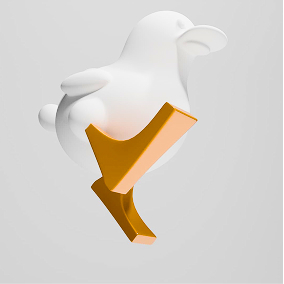
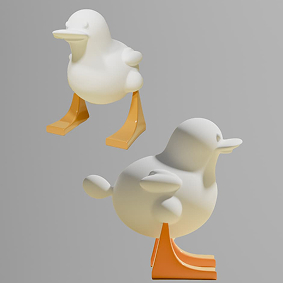
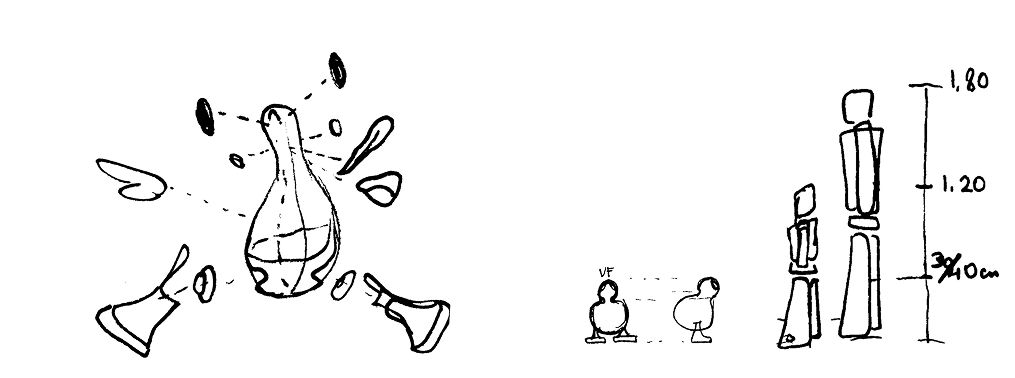
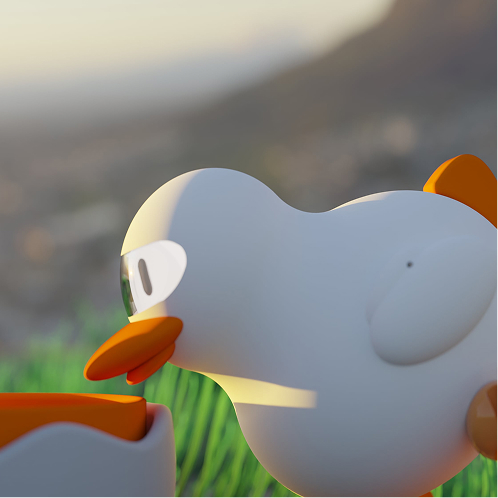
After sketching and some physical models, we realized the first shapes of the robot. We used soft curves and colored parts to communicate playfulness, like in toy design.

Key Features
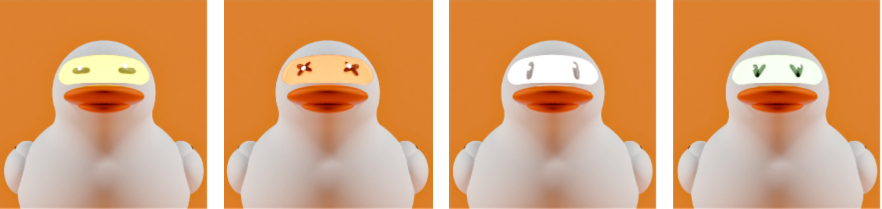
To reduce the uncanny feeling we introduced a dynamic display that allows the companion "Ducky" to change expression based on the situation: green when a task is performed, red if it needs help, or yellow for standby.
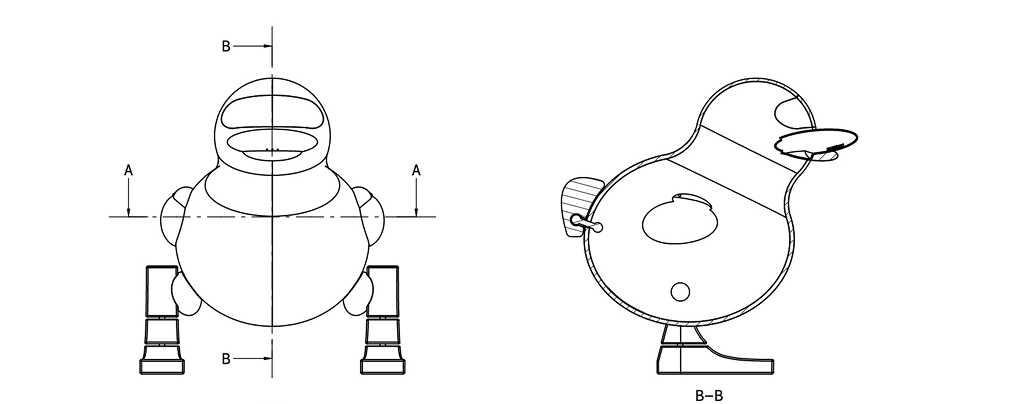
We decided to use colored orange parts to signal the elements that can move and interact with the real world: the mouth to collect waste, the legs and the tail for movement purposes.
The Home
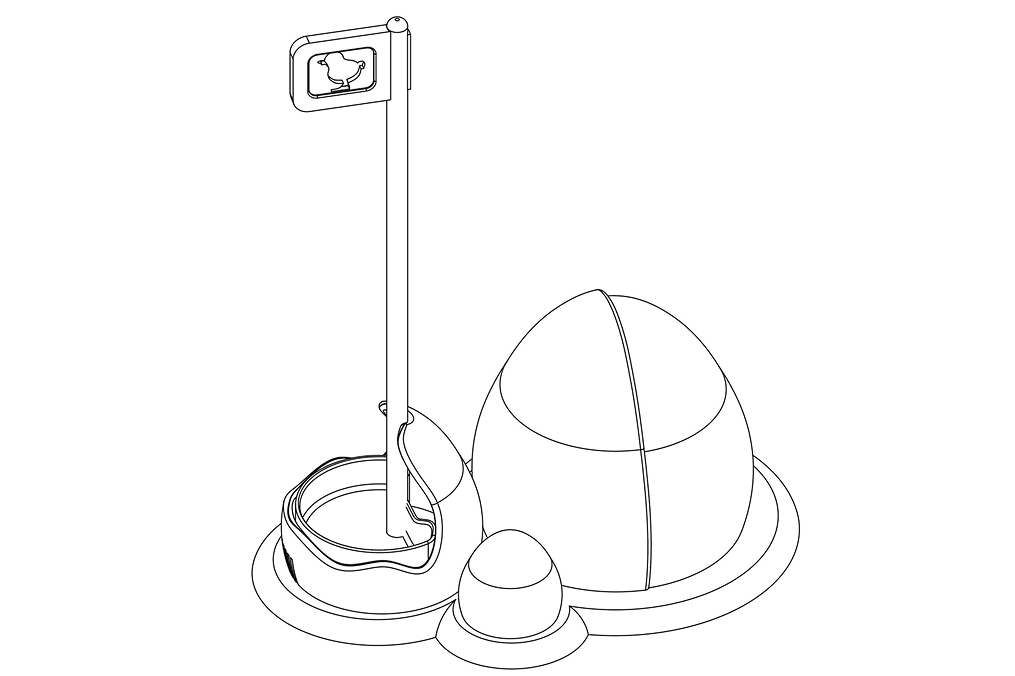
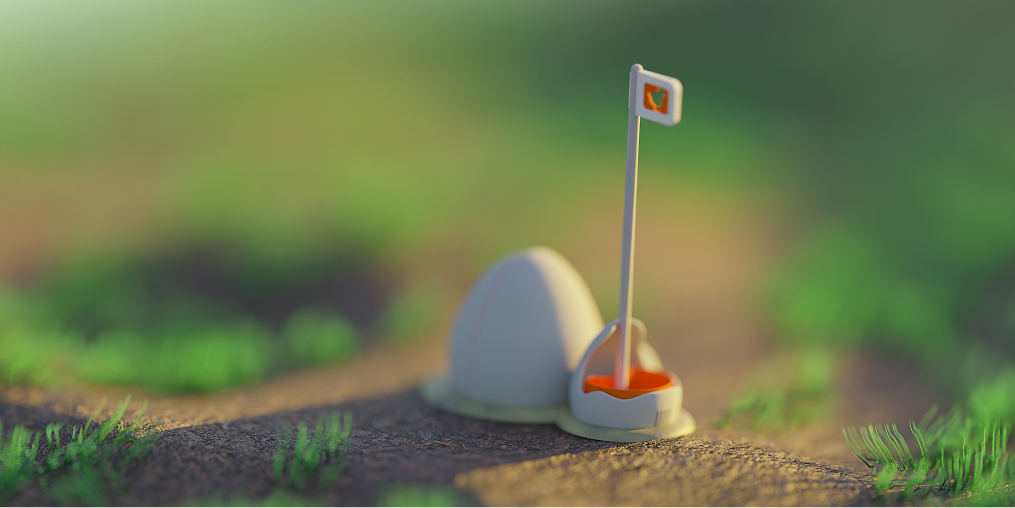
We conceptualized a "home" for the duck — a docking station used to recharge the batteries and store the trash that is collected. The home acts as a visible landmark in the urban environment, signaling Ducky's presence in the neighborhood.